

 by Graham Dyer
Close to seventy million people in the United States speak a language other than English at home. In England and Wales the census puts it at about one in eleven. In Canada, French is not another language at all: it is the other official one, and more than one in five Canadians lives in it. These are the people touring apartments, asking about pet policies, comparing floor plans and signing leases, and new arrivals overwhelmingly rent long before they buy. Leasing teams have always known this: someone in the office takes the Spanish calls, a tour happens in Korean, a guarantor question arrives in Vietnamese. The website is usually the last part of the operation to find out.
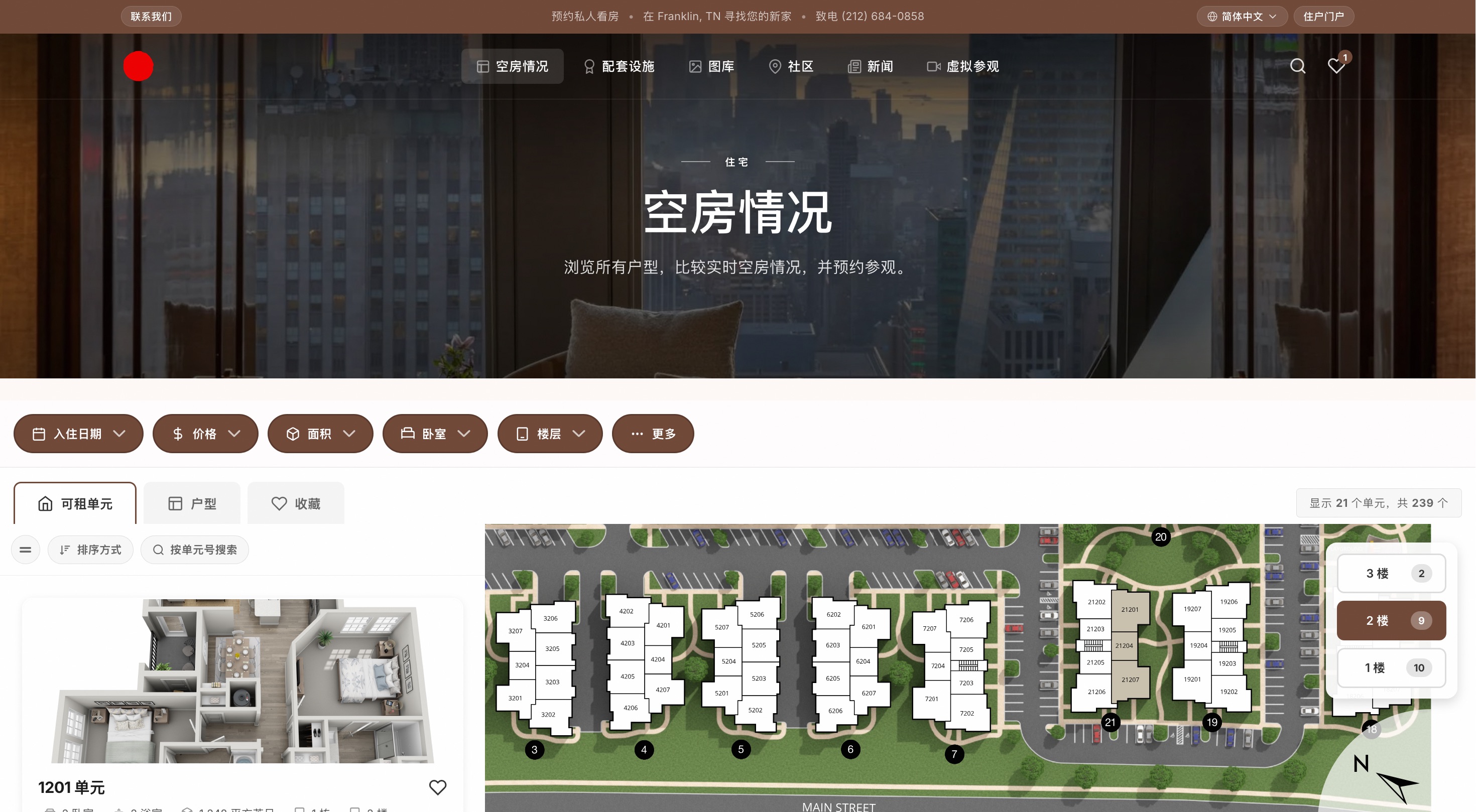
Today it finds out. Languages is a new part of WP FloorMap that serves your entire apartment website in Spanish, French, Chinese in both Simplified and Traditional scripts, Japanese, Korean, Brazilian Portuguese, Vietnamese, Filipino, Polish and Romanian. Real URLs on your own domain, translations that know what a floor plan is, search signals done properly and not a single duplicated page. Like the rest of WP FloorMap, it is designed to be live in an afternoon.
Eleven languages, chosen for who rents
Look at the list again, because the list is the point. Vietnamese and Filipino are not what a translation plugin gives you when it works through a map of Europe. They are what you get when you start from who actually walks into a leasing office: Spanish and Chinese near the top of the American count, Vietnamese and Korean close behind, Tagalog among the fastest-growing languages in Canada, and Polish and Romanian the two largest non-English languages on the British census. That last pair matters more every year. Britain’s build-to-rent sector is doing what multifamily did in North America, and the renters filling its buildings are exactly the ones its census counts. Multilingual support in web software has usually meant an internationalization checkbox aimed at selling software abroad. This is the other thing: the languages a leasing office already hears, at last on the website.
Each language arrives with the whole product already translated. Every button, filter, tour form, availability label and screen-reader announcement in WP FloorMap ships in all eleven, complete and consistent, before a word of your own content is touched. Enabling Spanish does not begin a project; it flips on a site that already speaks it.
Bilingual in an afternoon: the Canadian case
One market deserves its own paragraph, because it is ours twice over. Foreword is a French-speaking company: our own site runs in French, and the French in WP FloorMap was written as a sibling of the English rather than a translation of it. Vouvoiement throughout, the typographic apostrophe where an English keyboard settles for the straight one, and the vocabulary renters already see on Centris, Québec’s own listing portal.
That matters because in Canada bilingual is not a feature, it is the baseline: more than one in five Canadians lives in French and Québec expects commerce to speak it. A property site that treats French as an afterthought reads exactly like one. With Languages, a bilingual French-English community site is the default output of an afternoon rather than a second project: /fr/ URLs beside the English ones, hreflang pairs that agree, and the tour forms, availability labels and fee tables already fluent in both.
A WPML alternative: one page, not eleven copies
The standard WordPress answer to multilingual, the approach WPML and Polylang take, is duplication: every page gets a copy per language, each copy a separate page to maintain. It is a reasonable design with a well-known cost. A forty-page property site in eleven languages means four hundred forty more pages to maintain, and the drift starts immediately: rents change on one copy, an amenity is renamed on another and two years later the Spanish site quietly describes a different building.
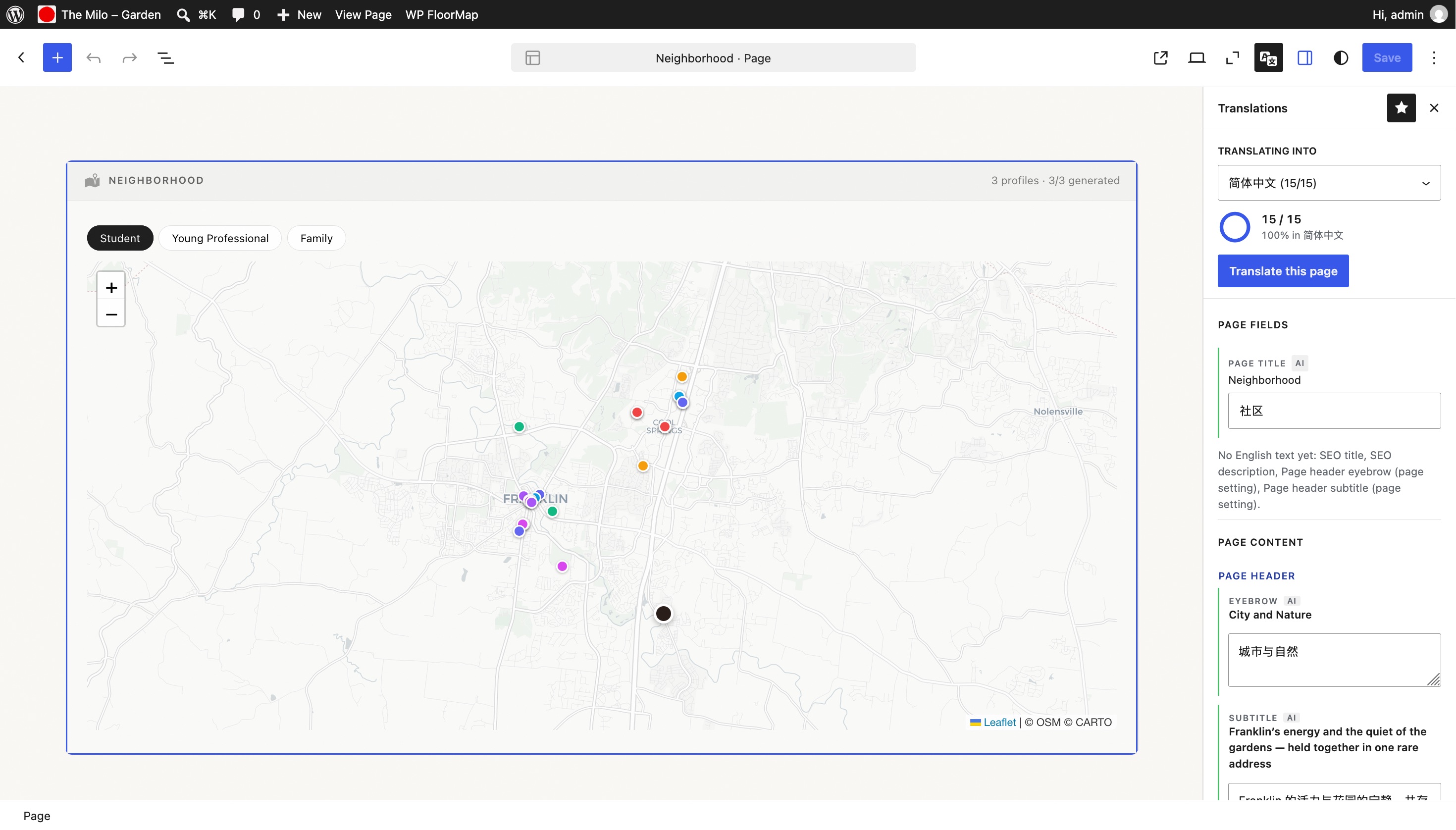
Languages keeps one page. Translations live in an overlay, keyed to the exact English text each one translates, and the right language is applied at the moment the page is served. Your availability, pricing and floor plans come live from Engrain either way, the same numbers in every language, because data was never something to translate. And when you edit the English, the fingerprint no longer matches: exactly the affected translations are flagged stale on a coverage table and one click re-translates them. On Launch and Studio an hourly runner re-translates changed property data without being asked.
A translation is a promise that the page still says what the English says. Duplicated pages break that promise quietly. An overlay keeps it, because there is nothing separate to fall behind.
Translations that know where they are standing
Start with who does the translating, because there are two layers and they are not handled the same way. The core interface, every button, filter, label and screen-reader announcement a renter meets, was done by professional translators in all eleven languages and ships finished. Your own content, the words only your property has, goes through Claude’s API on the latest models, and any string it produces can be edited by a fluent speaker on your team at any time.
Machine translation earned its reputation for a reason, and the reason was context: a model asked to translate “Studio” with no idea whether it is an apartment, a button or a brand will guess. So we never ask like that. Every string of your content goes to Claude carrying what kind of string it is, where it appears, your property’s own context and a register brief written for that language and this industry. Spanish is rendered in the usted register renters see on the major listing sites. Japanese follows the conventions of Japanese property portals. Filipino keeps the English real-estate terms Filipino renters actually use, and translates the courtesy around them. Screen-reader labels are translated as spoken language, and search titles and descriptions are held to their display limits in the translation, not just in the English.
You stay the editor. A glossary you control is applied exactly, including terms that must never be translated. Brand names, property names and floor plan names pass through untouched. Every translated string can be reviewed and overridden, and your wording wins over the machine’s, permanently. And the categories where a wrong word costs money (fee notes, disclaimers and pet policies) carry a visible translation notice until a person approves them: a mistranslated fee is not a typo, it is a dispute.
Built to be found: hreflang done right
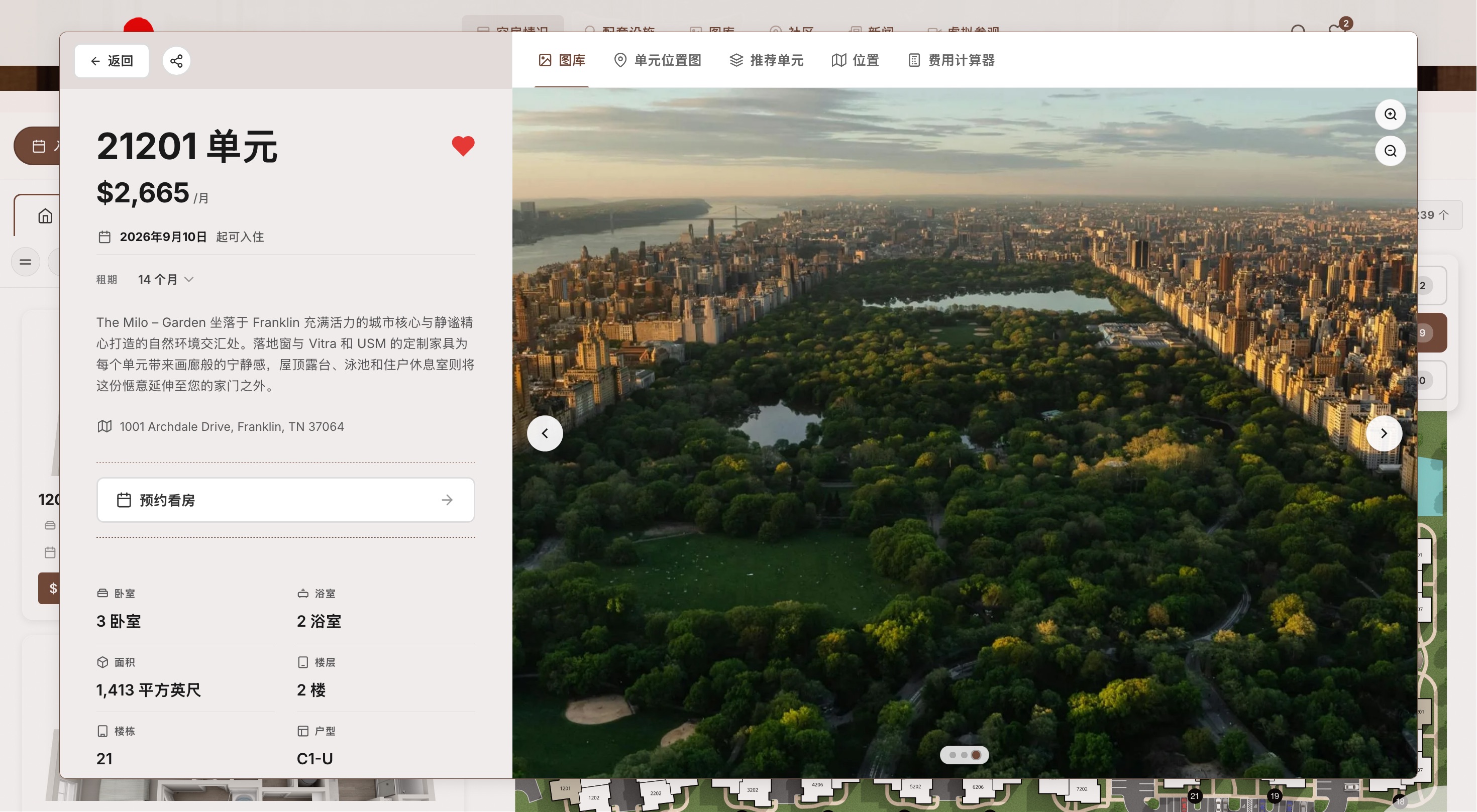
A translated site that search engines cannot read is a brochure in a drawer. Languages emits the boring signals correctly, which is rarer than it should be: every language serves real URLs on your domain, every variant carries the complete set of hreflang alternates with English as the x-default and each language gets its own sitemap listing only the pages genuinely served in that language, so a crawler is never handed an English page wearing a Spanish address. Canonicals are computed from the same rule as the sitemaps and the alternates, which means the three signals cannot disagree, and structured data declares its language alongside the rest of the machine-readable layer WP FloorMap already ships.
This matters beyond Google. Renters now ask AI assistants for apartments, and they ask in their own language. An assistant answering in Spanish quotes sources it can read in Spanish. Eleven languages is not just eleven audiences; it is eleven ways to be the site an assistant cites.
On in an afternoon
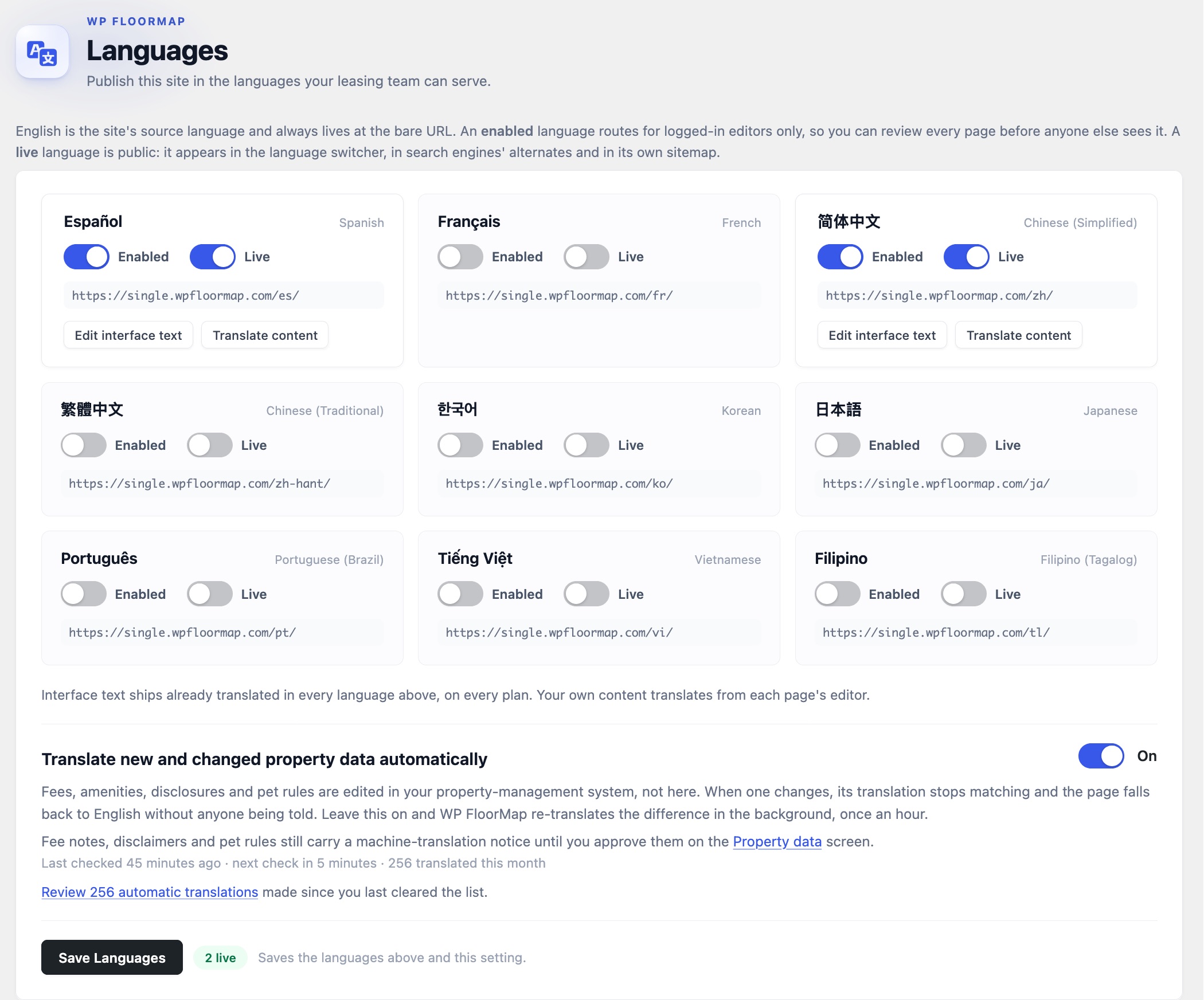
Setup is a page, not a project. Each language is a card with two switches: Enabled to start working on it, Live to publish it to visitors, so you can translate in private and launch when it reads right. Saving installs the WordPress language pack, so dates and core text localize too. One button translates your content and property data with live progress. A coverage table shows exactly what is translated, stale or waiting on every page, and each page’s editor carries its own translation panel for fine control. Visitors get a language switcher that keeps them on the page they were reading.
The short version
- Eleven languages, chosen for who rents. Spanish, French, Simplified and Traditional Chinese, Japanese, Korean, Brazilian Portuguese, Vietnamese, Filipino, Polish and Romanian, with the whole interface pre-translated in all of them.
- One page, never eleven copies. Translations are an overlay on your existing site, not a fleet of duplicate pages drifting out of date.
- Context-aware translation. Claude translates every string knowing where it appears, in the register of that language’s own rental market, under a glossary you control, and you can override anything.
- Honest about sensitive text. Fee notes, disclaimers and pet policies carry a translation notice until a person approves them.
- Search done right. Real per-language URLs, complete hreflang sets, per-language sitemaps and canonicals that agree with each other by construction.
- Stays true over time. English edits flag exactly the affected translations stale, and premium plans re-translate changed property data hourly.
Languages ships in WP FloorMap 4. The interface speaks all eleven languages on every plan; AI translation of your content and data runs on Launch and Studio. If some of your renters have been waiting for your website to speak to them, get in touch.
Frequently asked questions
Which languages does WP FloorMap support?
Eleven, chosen for who rents rather than for a localization checklist: Spanish, French, Chinese in both Simplified and Traditional scripts, Japanese, Korean, Brazilian Portuguese, Vietnamese, Filipino, Polish and Romanian, the last two being the largest non-English languages on the British census. Right-to-left languages such as Arabic are not here yet; they need mirrored layouts done properly, and we would rather ship them well than ship them nominally.
Does WP FloorMap duplicate my pages the way WPML and Polylang do?
No, and this is the core design decision. The standard WordPress approach creates a copy of every page for every language, which an eleven-language site turns into hundreds of near-identical pages that drift out of date the moment someone edits one of them. WP FloorMap keeps one page and stores translations as an overlay keyed to the exact English text each one translates. When the English changes, the affected translations are flagged stale on a coverage table, and nothing else on the page is touched.
How good are the AI translations?
The interface itself is not machine translation at all, it was done by professional translators in all eleven languages. Your own content is translated by Claude with real context: what kind of string it is, where it appears on the page, a register brief written for that language and this industry, your property’s own details and a glossary you control, including terms that must never be translated. Spanish follows the usted register renters see on the major listing sites, Japanese follows the conventions of Japanese property portals, Filipino keeps the English real-estate terms Filipino renters actually use. And you stay the editor: any string can be reviewed and overridden, your edits win over the machine’s. Sensitive text such as fee notes and pet policies carries a translation notice until a person approves it.
What does WP FloorMap Languages do for SEO?
Every language serves real URLs on your own domain, and the plugin emits the full set of signals search engines ask for: complete hreflang alternates on every variant with English as the x-default, per-language sitemaps that list only the pages genuinely served in that language, canonicals computed from the same rule and structured data that declares its language. Because all three signals answer from one predicate, they cannot contradict each other, which is the failure that gets multilingual sites ignored.
What happens when I edit the English page?
Each translation is fingerprinted to the exact English text it translates, so an edit marks precisely the affected translations stale and leaves the rest standing. The coverage table shows what needs another pass; one click re-translates it. On Launch and Studio an hourly runner re-translates changed property data on its own. Nothing silently serves an outdated translation of a sentence you rewrote.
Is Languages included in my plan?
Languages is part of WP FloorMap on every plan, and the interface text ships already translated into all eleven languages. AI translation of your own content and property data runs on Launch and Studio. On the Plugin plan the same editors are all there, so you can translate every page, menu label and data field by hand and keep full control of the wording.
Can it run a bilingual French-English site for Canada?
Yes, and this is home ground: Foreword is a French-speaking company and our own site runs in French. Enable French and your site serves /fr/ URLs beside the English ones with matching hreflang, one page per page. The French follows North American usage, vouvoiement and the vocabulary renters see on Centris, and everything WP FloorMap renders itself ships already translated. An afternoon covers it.
Prêt à voir la différence ?
Envoyez-nous votre propriété et nous vous montrerons WP FloorMap sur vos propres données : un vrai site d’aperçu, sous un jour ouvré.